
PASTELLES AND PARANG
Christmas Customs In a Carnival Country

We have frequently posited that the Republic of Trinidad and Tobago can be considered the ultimate Carnival destination. To be sure, The Tradition has been observed far longer in Venice; Rio and New Orleans get more attention. But for reasons of history and demography, the bacchanal has shaped T&T’s identity in a way that surpasses other countries.
In area and population, Trinidad is the larger of the islands. First colonized by Spaniards, it was seized by the British in 1797. Under both empires, European planters exploited the toil of enslaved Africans. After emancipation in 1834, many Black inhabitants eschewed agricultural work, preferring to forge livelihoods in Port of Spain and other urban centers. Starting in 1845, indentured laborers arrived from India, playing a crucial role in the cultivation of sugar, cacao, and other cash crops. Today, the Afro-Caribbean and South Asian communities each account for roughly 40% of the populace.
Among those of Indian descent, most are Hindu, although Islam is also practiced. Roman Catholicism is the largest Christian denomination; Orisha and Obeah preserve links to the animist faiths of West Africa. In Europe and North America, a commercialized Christmas is centered as “the most wonderful time of the year” even among those whose Christianity may be nominal at best. Carnival, of course, originated in the Catholic liturgical calendar. Nevertheless, the Twin Island Republic’s pre-Lenten festivities provide a communal experience that cuts across sectarian and ethnic divides.
None of this should suggest that Christmas is ignored. In this issue, we will explore some of the rhythms that get a music-mad land jumpin’ up as snow starts to fall in cooler climes. Before doing so, a glance at the map may be helpful.
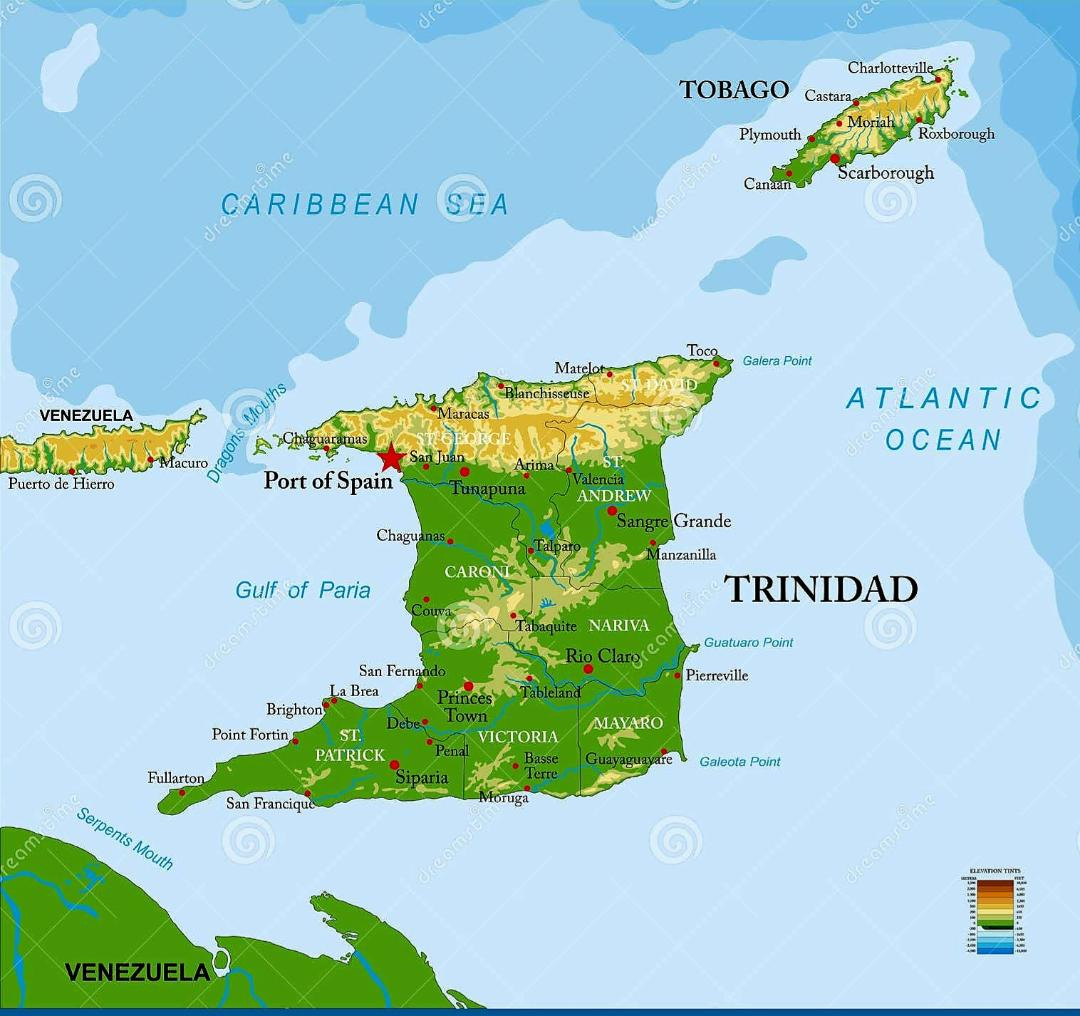
Culturally, Trinidad has much in common with Jamaica, Grenada, and other anglophone islands. Geographically, it is far closer to Venezuela. Over the centuries, this proximity has been something of a mixed blessing. Like the western hemisphere’s only OPEC member state, T&T boasts abundant hydrocarbon reserves. Among sovereign Caribbean countries, only The Bahamas and Dominican Republic have a higher per capita GDP. For well over a decade, a steady stream of Venezuelan migrants, fleeing economic chaos and political repression, have sought refuge on Trinidad. With the lawless cabal in Washington now threatening invasion, that stream may soon become a flood.
The situation was reversed during the Spanish colonial era. The lure of the mainland was such that few chose to settle in Trinidad. Seeking to bolster the colony’s viability, the government in Madrid invited French subjects to establish plantations. The earliest calypsoes were sung in en Français. Carnival Monday is referred to as j’ouvert, or “daybreak”.
Spanish is still heard in the run-up to Christmas as the islands resound with the sounds of parang, a genre of seasonal music. Like old-timey carolers in the USA, or wassail singers in medieval England, parang ensembles roam the streets, serenading their neighbors, who may offer a sip of holiday cheer. Vocal harmonies are enhanced by mandolins, acoustic guitars, assorted percussion and the cuatro, a stringed instrument also found in Venezuela.
Alan Lomax was an American musicologist. Working for the Library of Congress, he preserved and promoted songs by Woody Guthrie, Lead Belly, and many others. Collaborating with novelist Zora Neale Hurston, he helped document folkways in Georgia and Florida. In 1941, he headed to Clarksdale, Mississippi, hoping to record Robert Johnson. On arrival, he learned that the “Crossroads” singer had died. Residents, however, introduced him to a younger musician named Muddy Waters, who would go on to embody the Chicago blues style.
In 1962, Trinidad and other British possessions were gearing up for independence. The University of the West Indies sponsored a visit by Lomax. The month of May found him in Lopinot, a small town east of the capital. At the home of Sotario Gomez, he took in performances by James Medina, The Rose of Sharon Singers, and Segundo Dolabaille, a/k/a Papa Guhn. The session produced some of the earliest known parang recordings.
An hour’s drive west of Lopinot, the hilltop village of Paramin is known as “The Herb Basket of Trinidad”. For our purposes, it is more noteworthy for a parang festival held each December. Los Alcaran celebrated La Paramin on a 1976 album of the same name:
Far to the south, one finds Siparia. Kamla Persad-Bissessar, currently the Prime Minister of Trinidad and Tobago, was born there in 1952. Among music lovers, the town is better known as the home Daisy Voison, “The Queen Mother of Parang”. Born in 1924, she worked as a teacher, nurse, and midwife before achieving musical fame.
Since at least the 18th century, the parish church has sheltered La Divina Pastora, a black Madonna statue venerated by Catholics as well as local Hindus and Chinese Buddhists. A choir member, Daisy was inspired to spread the gospel through parang. Helping to form a group named for “The Divine Shepherdess”, she originally sang back-up. In 1974, after lead singer Francis Molloy fell ill before a show, Daisy Voison became an ambassador for her nation and its music.
Traditional parang tends to focus on the nativity of Jesus and other religious themes. In the late 1970s singers like Edwin “Crazy” Ayoung began to fuse the idiom with soca – itself derived from calypso. Soca parang lyrics are generally secular and in English – although the exhortation baila (“dance!”) is frequently heard.
Advent overlaps with the release of soca tunes for the upcoming Carnival season. Artistes hope their compositions might earn accolades in the Soca Monarch competition, or be recognized as the year’s official Road March. Machel Montano has garnered both honors multiple times, but he still found time to tell the tale of “Soca Santa”:
In 2005, Rem Bunction – a talented vocalist and animator – released “Mr. Santa Claus”, expressing well-justified complaints about the quality of gifts he received over the years. In a follow-up song, our bard reconciled with the Jolly Old Elf. Or, at least, one member of his family.
As in most places, the Christmas music of Trinidad and Tobago is enjoyed with plentiful food and drink. Among the most iconic offerings is an Antillean take on the fruitcakes relished or reviled in other lands.
“I love black cake”, says Jarrod Butts, “Thing is, not all cakes are created equal”. A fixture of Port of Spain’s radio and advertising sectors, Calvin shared his thoughts on “the Goldilocks factor… not too moist, not too dry. Just right. If it’s got maraschino cherries in ‘em? A keeper!”
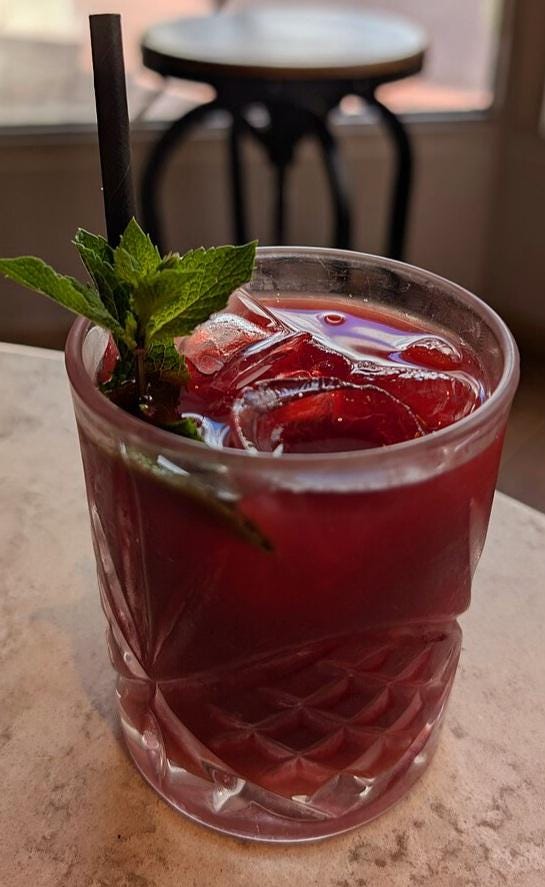
Divulging certain teetotal tendencies, he usually passes on ponche de crème, a potent, tropical variant on eggnog. Yet he acknowledges that hard liquor plays a key role in yuletide revelry. Rum bottles, he explains, are ideal vessels to store sorrel, a hibiscus flower infusion flavored with cinnamon, cloves, and other spices.
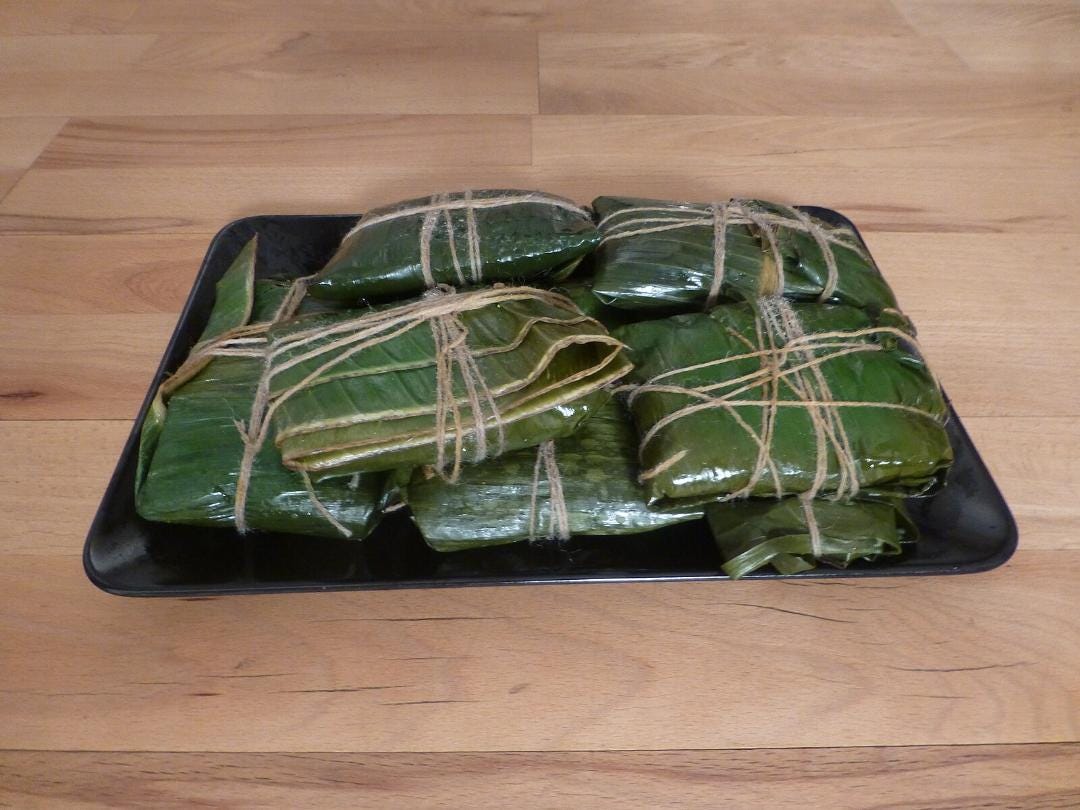
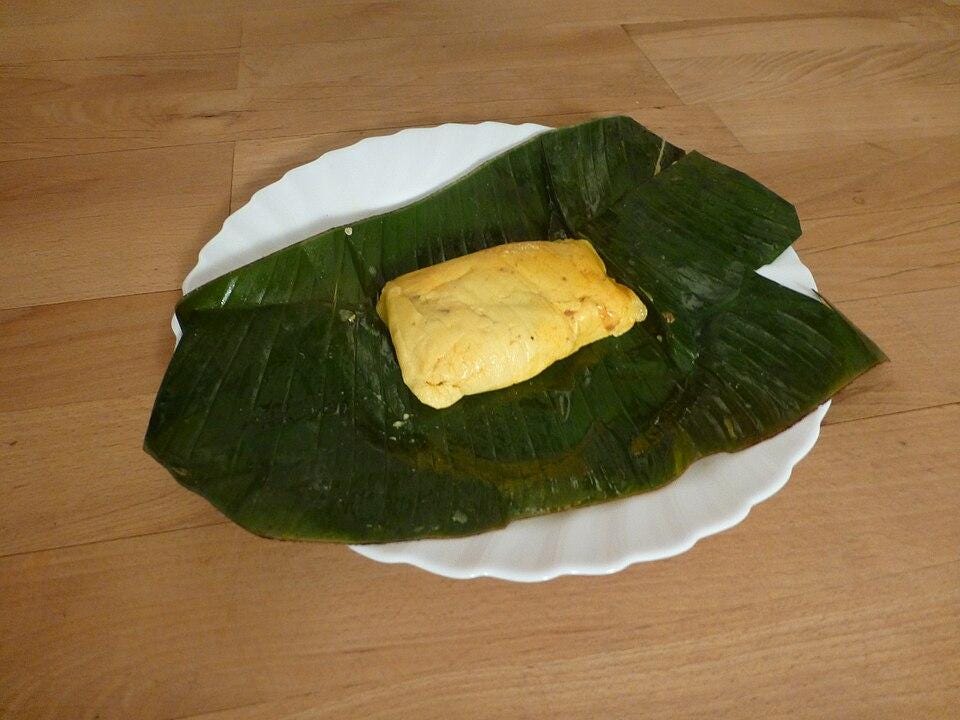
Boozy or not, Christmas beverages wash down the homemade treats called pastelles. Superficially, the delicacy might resemble Mexican tamales. A different variety of cornmeal is used; the meats have decidedly West Indian seasoning, and the snack is steamed in banana leaves rather than corn husks. In recent years, vegetarian or vegan pastelles have become more common, though for Mr. Butts Christmas must be carnivorous: “that’s non-negotiable”.
Sharing a playlist of parang, he mentions Los Tocadores, an ensemble with links to our friend Derron Ellies. His father, Beresford, was a founding member of the group; his mother Margarete later joined. While definitely on the traditional end of the parang spectrum, “in the early 1970s they were disqualified from their first parang competition finals for having steelpan in their instrumentation. Now, they are revered as innovators in that aspect”.
A renowned pannist and composer in his own right, Derron works with Los Tocadores on occasion, as in this number, written by Jennifer McPherson:
Whether your holiday season is a winter wonderland or warmed by Caribbean sunshine, if you live in Trinidad, Venezuela, or elsewhere on the planet, we wish you peace on Earth, and tidings of great joy!
Pastelle photos by Grueslayer, via Wikimedia commons
Always wanted to visit T&T!