
WATERCOLOR
Perspectives On A Composition

42 months ago, we launched this publication with the hope readers might come away with a wider understanding of The Tradition that has been observed for centuries across three continents, countless cities and multiple islands. We have to acknowledge, however, that if there is one place that most people associate with the celebration, that place is Brazil. Similarly, if asked to name one song that encapsulates the country’s allure, a solid majority would cite a collaboration between Vinicius de Moraes and Antonio Carlos Jobim. Released in 1964, the English-language version of The Girl from Ipanema kicked off a global craze for bossa nova. More than two decades before that, Ary Barroso penned a tune which, arguably, did even more to shape perceptions of Brazil around the world.
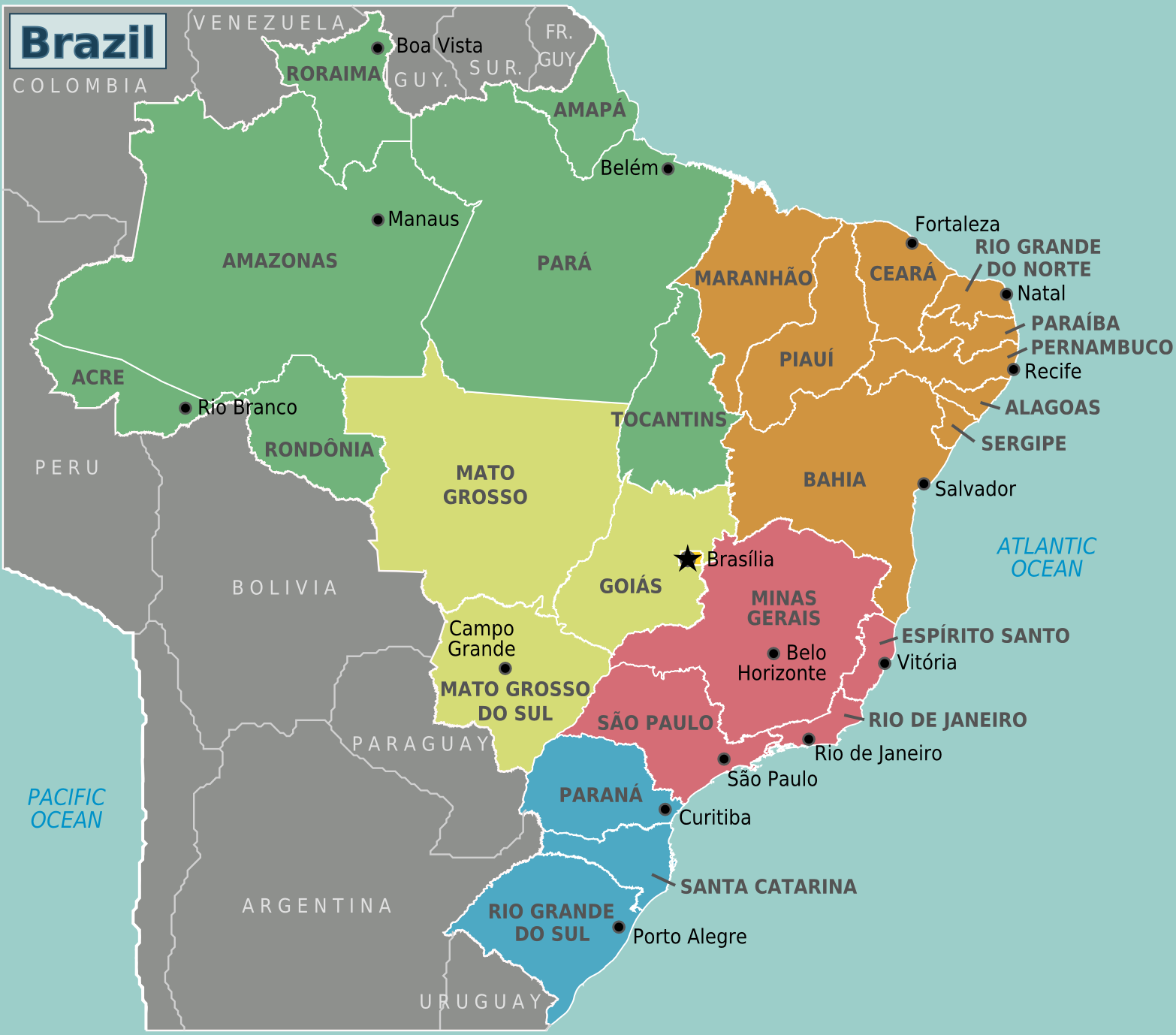
The composer was born in 1903, in the state of Minas Gerais. The name refers to the many mines that have made it one of South America’s most prosperous regions. A 17th century gold rush brought settlers from coastal communities. It also heightened tensions with Lisbon; the Portuguese crown demanded a 20% cut of all mineral wealth extracted from the state.
Since independence in 1822, the economy of Minas Gerais has continued to diversify, mining being augmented by manufactured goods and agriculture - especially dairy farming. By the early 20th century, national affairs were dominated by officials from Minas Gerais and neighboring São Paulo – a situation known as Politico do Café com Leite, or “Milk and Coffee Politics.
This did little to help little Ary. Orphaned at the age of 7, he was raised by his grandmother and an aunt. Despite their straitened circumstances, his guardians insisted their young ward take music lessons. At 17, he came into a small inheritance, but this did not last long. While ostensibly studying law, he earned money playing piano in cinemas and cabarets.
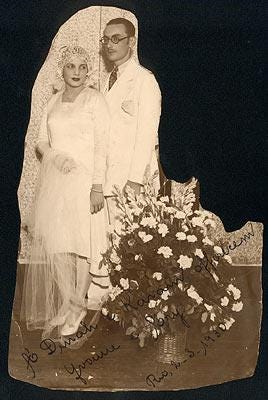
In 1920, Barroso moved to Rio de Janeiro. Eventually, he fell in love with a girl whose parents owned the boarding house where he was staying. Needing funds to marry, he wrote Da Nela for the 1930 Carnival season. A popular marcha, it won a cash prize from the Casa Edison record label.
1930 also saw a revolution that gave the presidency to Getulio Vargas; he would hold the office until 1945. Despite reports of torture, censorship, and a crackdown on opposition parties, Vargas had the support of many citizens who resented the regional hegemony of the Café com Leite system. His Estado Novo ideology employed music and Carnival culture as a way to bolster nationalist identity.
Barroso’s 1939 Aquarela do Brasil (“Watercolor of Brazil”) was not overtly political. Yet it was very much a paean to the beauty of the land and its people:
Oh, this Brazil
Beautiful and swarthy
Is my Brazilian Brazil
Land of samba and tambourine
Brazil! Brazil!
For me! For me!
Vargas’ rule must be seen must be seen in the context of the era. He spoke admiringly of Hitler and Mussolini, alarming US president Franklin Delano Roosevelt. FDR promulgated the Good Neighbor Policy to improve relationships between countries in the westerns hemisphere. One manifestation of this strategy was SALUDOS AMIGOS a 1942 film from Walt Disney Pictures. The movie includes short episodes highlighting Lake Titicaca, Chile, and the Argentine pampas. In the final segment, Donald Duck pals around with Jose Carioca, a dapper parrot who introduces his gringo guest to cachaça. Their bottomless binge is enlivened by Aloisio de Oliveira’s interpretation.
Ultimately, Brazil sent an expeditionary force to fight the Nazis in Europe. Inter-American solidarity was further enhanced by Brazil a setting with English lyrics by Bob Russell. His version replaces abstract patriotism with a personal account of tropical romance, imbued with saudade, that most Lusitanian of emotions:
Brazil, where hearts were entertaining June
We stood beneath an amber moon
And softly murmured “someday soon
We kissed, and clung together
Then tomorrow was another day
The morning found me miles away
With still a million things to say
In the mid-1960s, Frank Sinatra recorded with the great Jobim. Even before that, Brazil was included on 1958’s COME FLY WITH ME, a travel-themed concept album before concept albums were really a thing.
Terry Gilliam’s dark comedy BRAZIL is not set in the country. Rather, the title tune serves as a vibrant contrast to the grim dystopia depicted. The opening theme is from a 1968 album by Geoff and Maria Muldaur. Maria, of course, would achieve her greatest fame after she forsook the Pantanal and rainforests of Amazonia for the Sahara sands, with her massive hit Midnight at The Oasis.
Those looking to explore the musical richness of Brazilian music will do well to check out Tudo Bem. Roughly translated as “It’s All Good” the weekly program is broadcast live in southern Louisiana and streamed around the planet via WWOZ.org. Host Dean Ellis kicks off each edition with a rendition of the song in question.

Ellis explains that his fascination with the Federative Republic dates back to when he was “a young man of 24. I was kind of out of sorts, as one is at 24”. He got a call from his brother, who was working for an import-export firm in Belem, a city situated where the Amazon River spills into the Atlantic. Invited to hop aboard a cargo ship, Dean didn’t hesitate. After 6 months in the country, he sailed north again. Both voyages passed through the port of New Orleans, a city he had never previously visited.
Back home in New Jersey, he soon was stirred by wanderlust once more. “I said ‘Fuck it, I’m moving to New Orleans’ and I have pretty much been here ever since”. Doing some work for a radio reading service for the blind and print-handicapped, he recognized the voice of Katrina Geenen, who hosted Tudo Bem at the time. Then as now, ‘OZ was a listener supported station; all show hosts are unpaid lovers of the songs they spin. After her namesake hurricane sent Katrina back to her native Mississippi, Dean started alternating DJ duties with Suzanne Corley, who tragically succumbed to breast cancer in 2021.
Even after all this time, Mr. Ellis still thrills to discover iterations of Barroso’s anthem. Recently, he introduced the audience to an arrangement from “an old time Japanese singer named Tomoko Takara”. He also speaks fondly of recordings by The Coasters, Josephine Baker, and Johnny Mathis.
Space limits us from sharing all of Dean’s recommendations, but here’s an offering from the Crescent City’s Egg Yolk Jubilee, which fuses Nola brass and Pernambuco frevo, with a dash of Mexican banda thrown in for good measure:
In 1995, Dionne Warwick performed a bilingual medley on Brazilian TV; Dean describes it as “choreographically interesting”:
Intriguing as these international arrangements are, he also admires the work Daniela Mercury, a daughter of Bahia who helped make samba reggae and axé popular throughout Brazil:
Almost 100 years since Getulio Vargas took power, the regime in Washington has abandoned the Good Neighbor Policy for a hostile stance against the world. Domestically, the dictatorial playbook is being wielded against media outlets and free expression in general. For community and public radio stations, budgetary shortfalls pose an existential threat. To support the defiantly joyful work of Dean Ellis and the other volunteers, please consider becoming a “Guardian of The Groove” by donating whatever you can.
Obrigado, y’all!
What a delightful, interesting, entertaining and informative post! And I loved all the renditions of Brasil!!
This is very cool. I learned a lot. The animation on the Donald Duck cartoon was just sumptuous.
I support KTSU in Houston. I second the call to support music on public radio.