
SOUVENIR
Jumpin' Up As Empires Fall

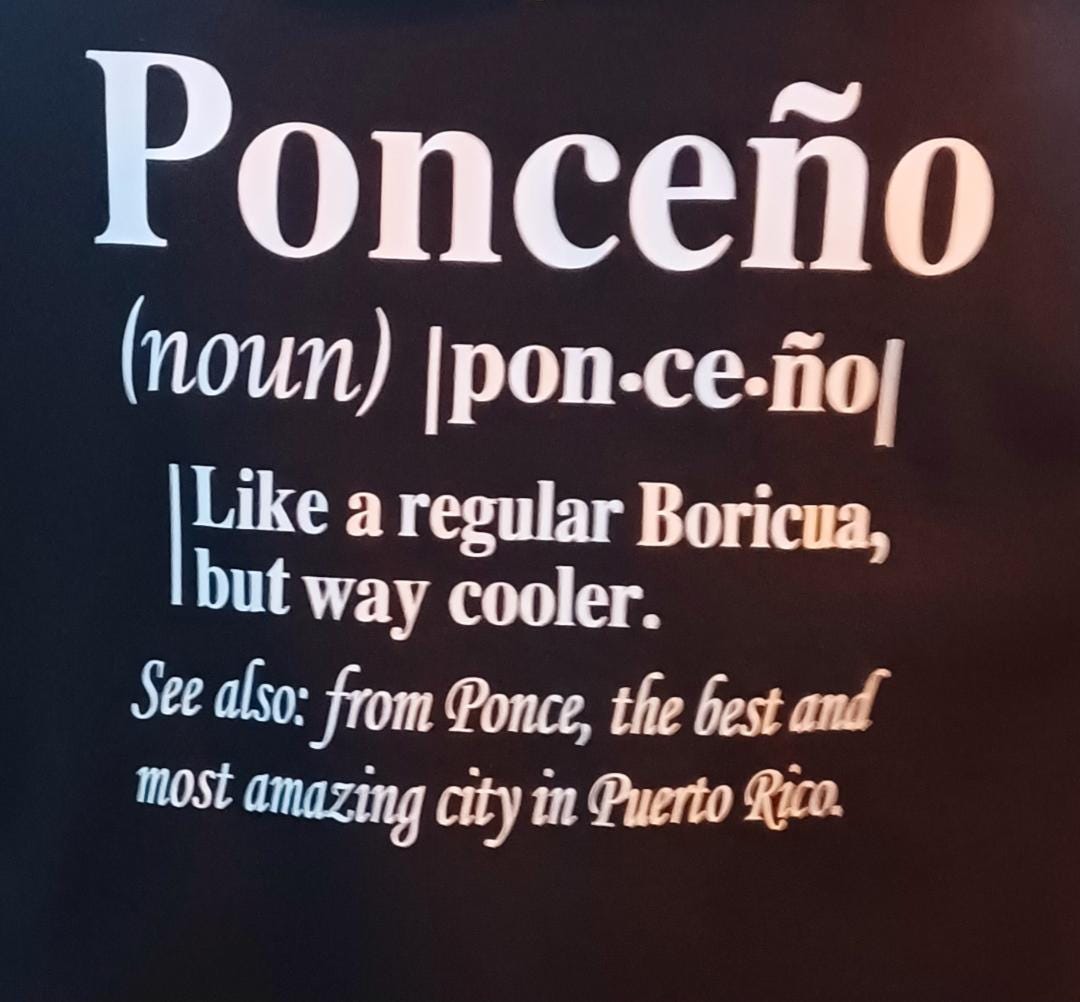
The Autonomous Municipality of Ponce hosts Puerto Rico’s most vibrant Carnival celebration. Founded in 1692, it is the island’s largest city outside the San Juan metropolitan area. Visitors may pick up a vibe reminiscent of another town, one located west across the Caribbean, and North of The Gulf of Mexico.
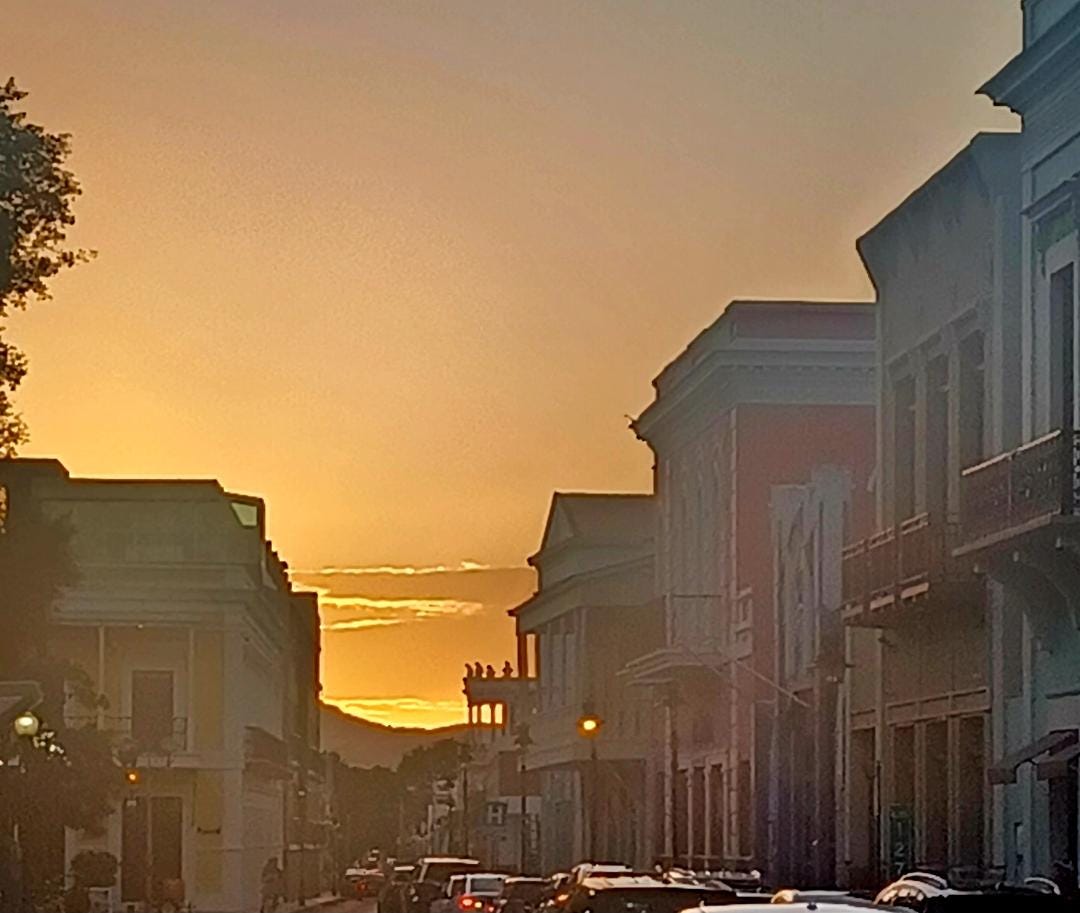
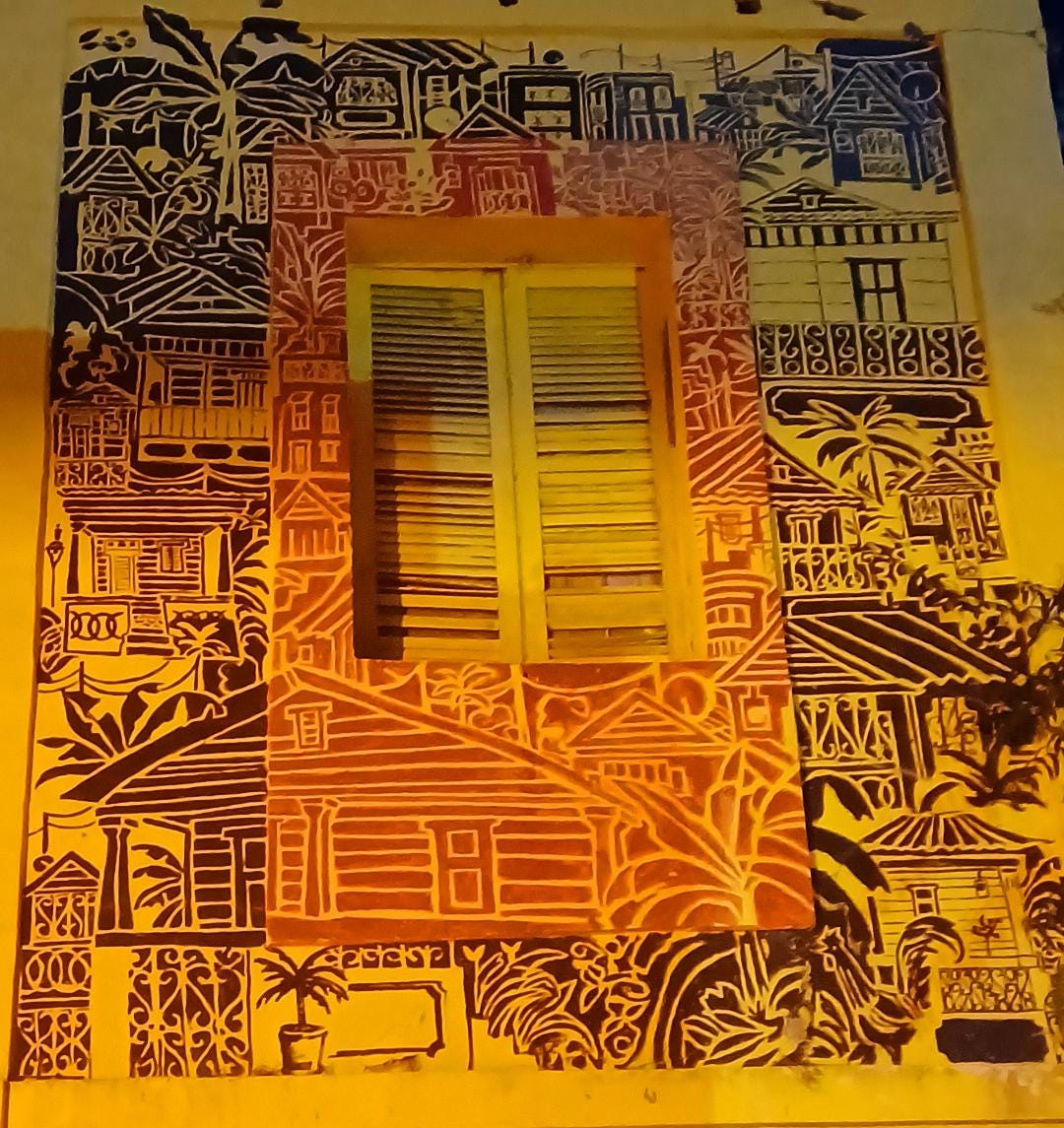
Like New Orleanians, Ponceños have enormous pride in their community, which bears the sobriquet “The Pearl of The South”. In common with Nola, there is a passion for live music. The resemblance is especially obvious on an architectural level.
Much has been made of Louisiana’s Gallic heritage. In 1699 Pierre LeMoyne, Sieur de Iberville, landed there to reinforce France’s claim on the Mississippi Delta; New Orleans was established 19 years later. In 1762, King Louis XV transferred the city to his cousin, Carlos III of Spain. One should not overstate the importance of this change. Both men were scions of the Bourbon dynasty. Streets got new names, but most of the population continued speaking French on a daily basis. After devastating fires destroyed most of the Vieux Carré’s original wooden buildings, new construction followed Spanish creole patterns. The style is exemplified in the Cabildo, seat of the colonial administration, and the Presbytére, adjacent to St. Louis Cathedral. French Quarter residences featured balconies and decorative ironwork – elements also seen throughout Ponce’s historic center.
After the fall of the Bastille, Napoleon reasserted French control of Louisiana. In 1803, needing cash to finance his European wars, “The Little Corporal” sold the vast territory to the United States. The transaction more the doubled the size of the newly independent nation.
Louis Moreau Gottschalk, a composer and virtuoso pianist, was born in New Orleans in 1829. In 1861, yet another new flag – that of the Confederacy – flew over his hometown. One might have expected a young man from the south, descended from slave owners, to take a rebel stand. However, Gottschalk was an ardent champion of the Union cause. Travelling thousands of miles by train, he performed benefit concerts to bolster the Northern war effort. In 1864, his audience included Abraham Lincoln and his First Lady. In his journal, the musician described the 16th president as “remarkably ugly, but has an intelligent air, and his eyes have a remarkable expression of goodness and mildness”.
Political sympathies aside, what was the nature of Gottschalk’s gift? At the age of 13, he traveled to France to study at the famed Conservatoire de Paris. There, he impressed such luminaries as Franz Liszt and Frederic Chopin; the latter predicted that the young American would “become the king of pianists”. Gottschalk’s work is very much grounded in the European orchestral tradition, but also reflects African influences. He would have been exposed to such sounds in Congo Square as a boy, as well as during frequent travels in Latin America.
Spain’s New World empire once extended from Tierra del Fuego to Texas and beyond. By the mid-19th century, Iberian dominion was effectively limited to Cuba and Puerto Rico. Gottschalk visited both islands in the late 1850s. After playing a series of well-received concerts, he enjoyed an extended sojourn outside of San Juan. It was there, toward to the end of 1857, that he composed the evocative “Souvenir de Porto Rico”
His host gave his guest free rein over a cottage perched near the edge of a crater. “My cabin overlooked the whole country” he wrote. “Every evening I moved my piano out upon the terrace and played for myself everything that the scene opened up before me inspired.”
The piece carries the subtitle Marche des Gibaros. As the liner notes from Edward Gold’s 1973 recording explains “Gibaro”, more commonly spelled “Jibaro”, is a “A local word for the Puerto Rican peasant known for his shrewdness and resourcefulness”. More recently, Puerto Ricans of all backgrounds have embraced the Jibaro identity. This is similar to the ways some natives of the Southern Cone might call themselves Gauchos, despite never having ridden a horse or lived beyond Buenos Aires.
Generally poor subsistence farmers, Jibaros usually owned the land they cultivated. By contrast, the colony also held large sugar plantations which, until 1873, depended on the slave labor. The victims of the triangular trade spoke different languages and practiced various faiths, but music provided a common source of consolation. On Puerto Rico, this gave rise to bomba, a style of drumming and dance that emerged in the early 1800s.
Bomba can be viewed as an essentially agrarian folk music. On the other hand, plena, gaining popularity around 1900, gave voice to the urban working classes. Plena ensembles feature rich harmonies, call-and-response patterns, and topical motifs, often aligned with social protest. It’s not exactly a capella – the singers wield an array of handheld percussion instruments – but there are rarely horns, guitars, or keyboards.
The 2025 Carnival program included an evening devoted to the genre. One featured act was Los Pleneros de la Cresta. Formed in 2013, the ensemble saw their international profile rise after collaborating with rap and reggaeton superstar Bad Bunny.
While plena is a distinctively Puerto Rican idiom, the mix of styles known as salsa has become a rhythmic lingua franca, uniting the Spanish-speaking world. An open-air salsa ball was staged on March 3rd in the shadow of Ponce’s impressive alcaldia, or city hall. Among the performers was the brilliant trumpeter and vocalist Jota Ruiz.
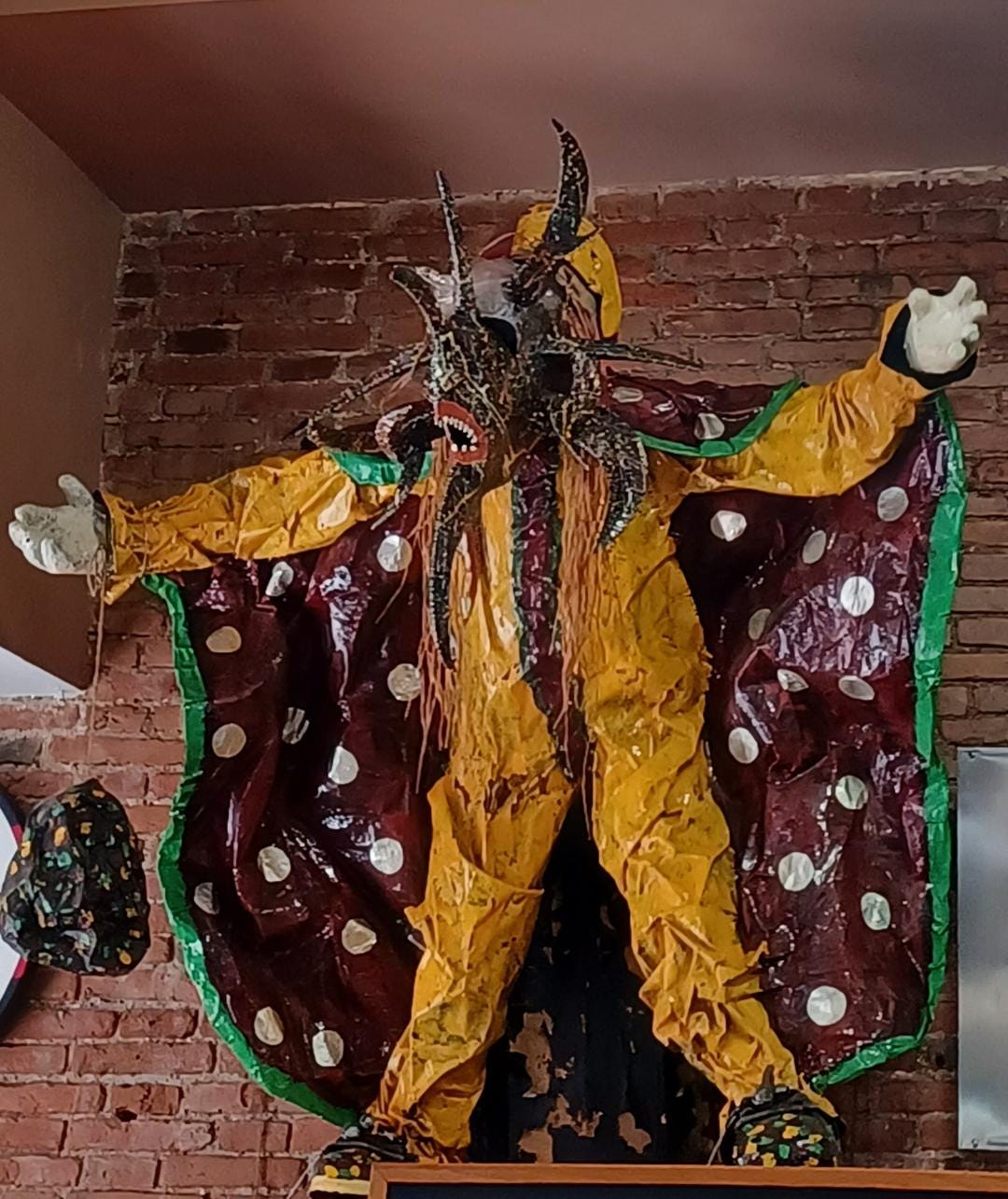
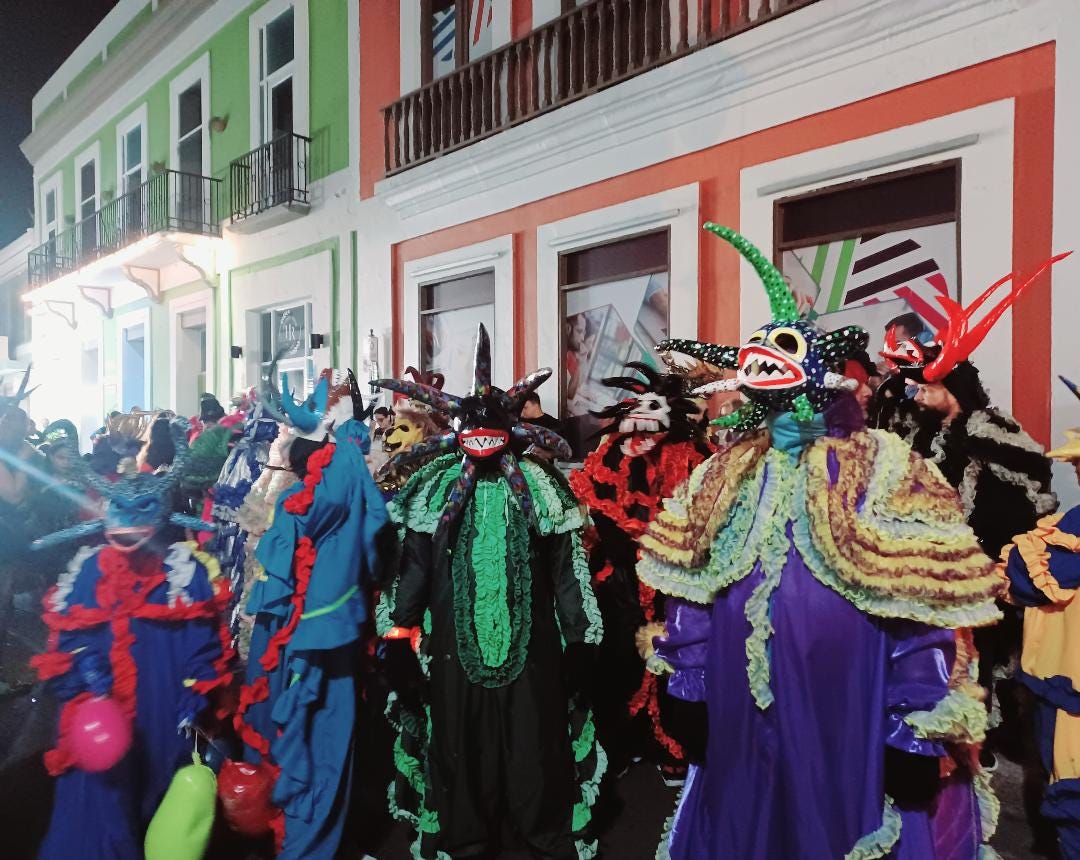
The island’s rich musical palate is reflected in the colorful costumes of vejigantes, folkloric characters also seen during celebrations in the Dominican Republic. Like the jab molassie of Trinidad and Panama’s diabolicos sucios, they bring a spark of demonic glee to the proceedings. Though some of the designs are truly frightening, the tradition is embraced by Ponceños of all ages; parents often urge their children to pose for photos with the multi-hued monsters. Of course, some vejigantes are themselves kids who, like many adults, take advantage of the season to indulge in the kind of mischief that would be forbidden at other times.
A cortege of vejigantes filled the streets on the evening of March 4th. That is when, after six days of frivolity, exhausted revelers gathered for El Entierro de la Sardina – The Burial of the Sardine, a mock funeral rite that marks the end of Carnival in many locales. The origins of the practice are obscure, but the custom was common enough in 19th century Spain that painter Francisco Goya depicted it in one of his most dynamic works.
Somber music played from a mobile sound system as a purple coffin approached Plaza las Delicias, the epicenter of the bacchanal. Mourners – including more than a few purported “widows” – accompanied the eponymous fish to its final resting space.
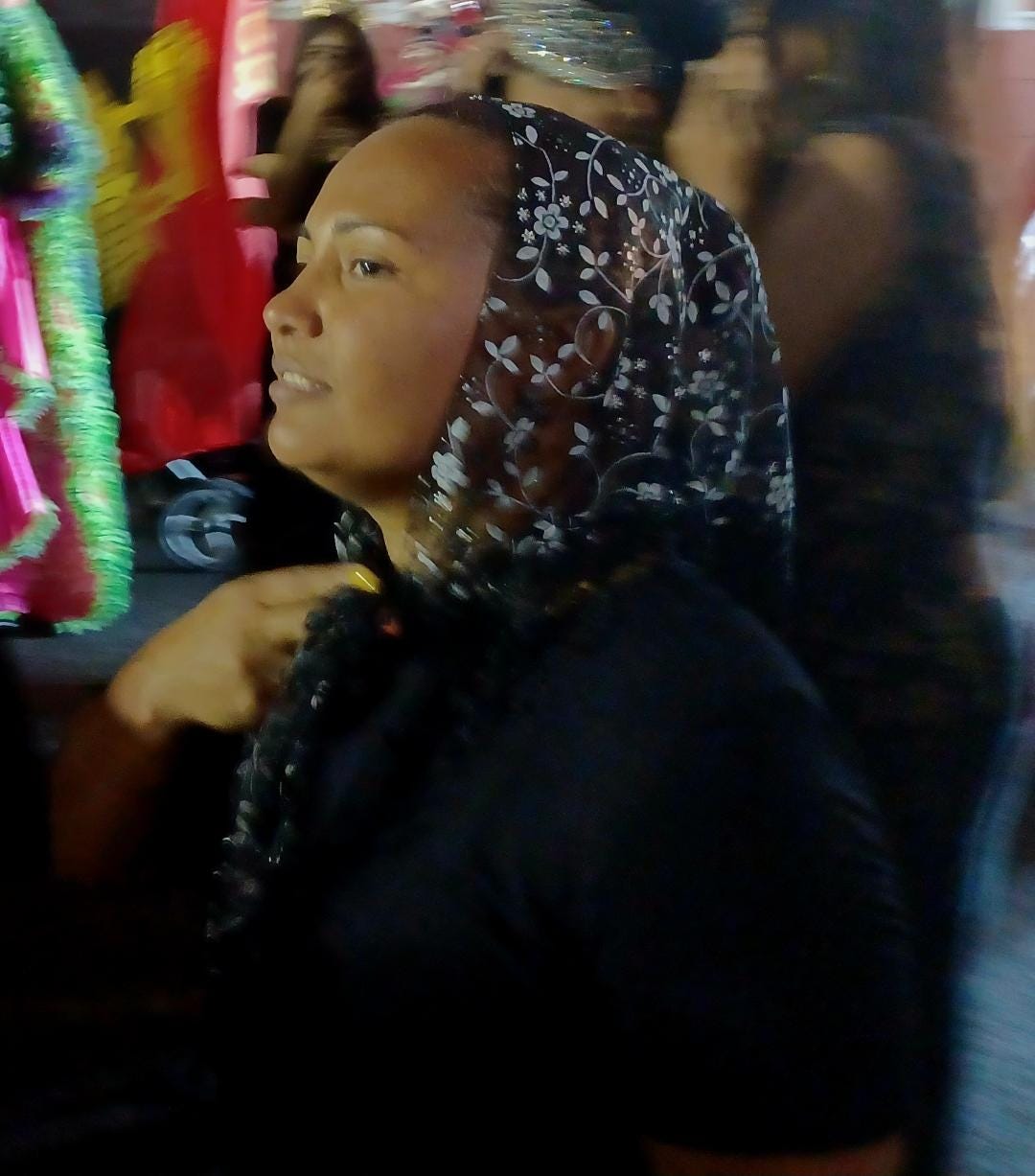
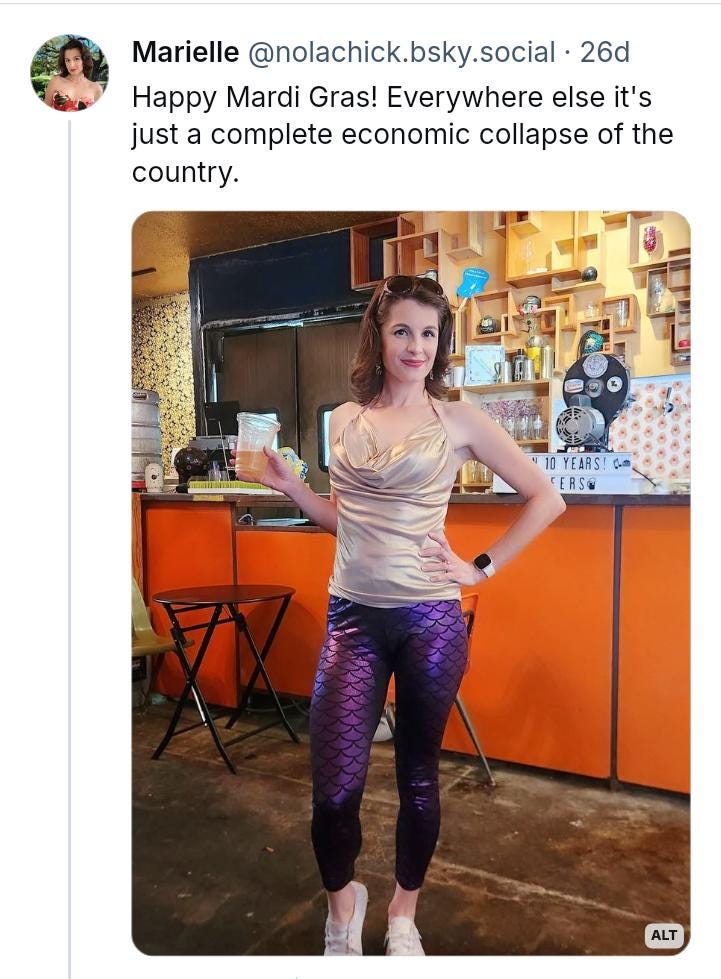
Gales of laughter mingled with feigned tears, but there was also a genuine sense of foreboding that had little to do with a party ending. Earlier in the day, in New Orleans, the krewes of Rex and Zulu staged the final parades of the 2025 Mardi Gras season. At some point that afternoon, author Marielle Songy posted greetings on the Bluesky social media app. Her message evoked a common refrain (“…Everywhere else it’s just Tuesday”) while acknowledging a nationwide crisis. In a buzzkill of historic proportions, the last day of Carnival coincided with Donald Trump, in his second term, making his first joint address to Congress. In the weeks before, a barrage of Executive Orders antagonized US allies, gutted federal agencies, and threatened a global trade war.
Among the hate-fueled diktats was a declaration making English the “official language” of the United States. Likely unconstitutional and clearly unenforceable, the announcement alarmed Puerto Rican living on the mainland as well as those at home in the Commonwealth. Puerto Rico residents are subject to federal taxation, but their representation in Congress is limited to a single non-voting member. Pablo José Hernandez, who currently holds the office, stated that the order “reflects a vision of American identity that conflicts with our Puerto Rican identity…and Puerto Ricans will never surrender our identity”.
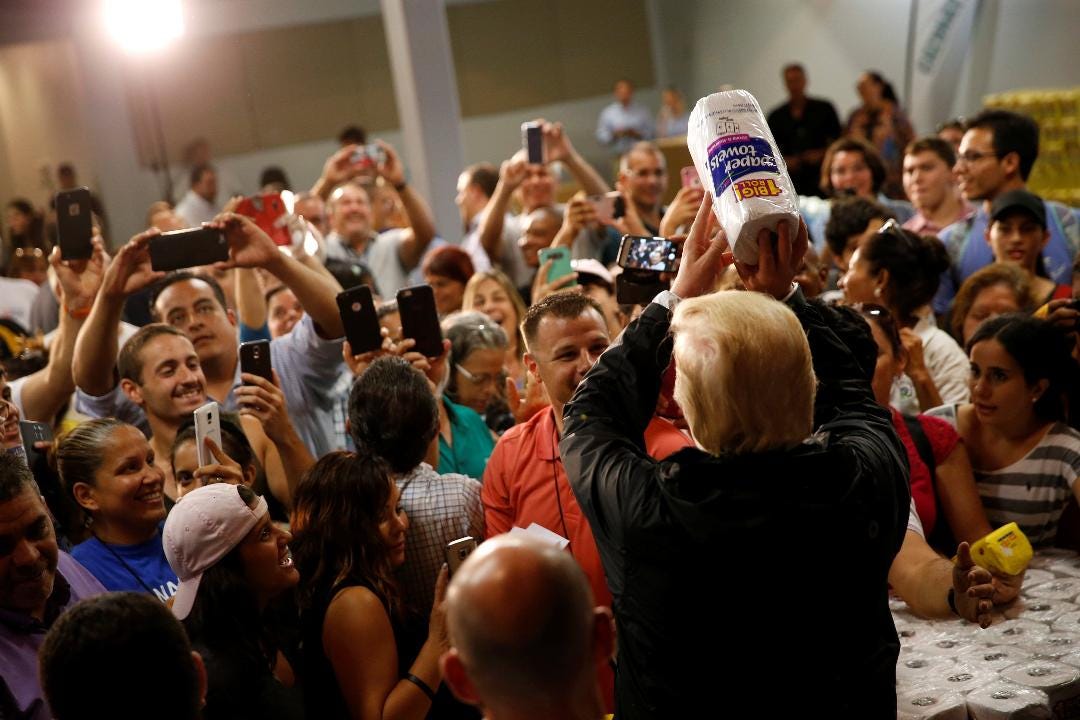
Linguistic issues aside, memories of Trump’s first term provide ample reason to fear the weeks and months ahead. In September 2017, Hurricane Maria ravaged the Caribbean, causing damages estimated at 91 billion dollars. Puerto Rico’s electrical grid was effectively destroyed, contributing to a death toll of almost 3,000 residents. The Commander-in-Chief visited some 13 days after the storm made landfall; during one particularly callous photo op, the president tossed rolls of paper towels at survivors who had gathered at a relief center.
According to Miles Taylor, who served in the Department of Homeland Security, Trump expressed a desire to swap the US Territory for Greenland because “Puerto Rico was dirty and the people were poor”. Appalling as all this remains, to fully understand the Island’s fraught and paradoxical relationship with the states, we must go back to a time long before the former game show host launched his political career.
Christopher Columbus’ second voyage to the Caribbean landed on the island natives called Borikén in September 1493. Estimates of the pre-contact Taino population range from 30,000 to twice that figure. Within decades violence, European diseases, and suicidal despair decimated that community. Beginning in 1513, Spaniards began bringing enslaved Africans to work their estates. Inspired by independence movements around the western hemisphere a revolt, centered in the town of Lares, began in 1868. The uprising was suppressed but it would not be long before another rebellion – in neighboring Cuba- would finally destroy the Spanish Empire and alter the course of Puerto Rican history.
The Cuban War of Independence began in 1895. The government in Madrid sent General Valeriano Weyler to the island in October of 1897. He forced residents of many districts into “reconcentration areas”. News of his brutality – sometimes, but not always, exaggerated – outraged public opinion in the United States. William McKinley, elected president in 1896, denounced Spain’s tactics as “extermination” rather than “civilized warfare”. Less publicly, he worked to negotiate a diplomatic solution to the conflict.
That proved untenable after February 15th, 1898. The U.S.S. Maine, a naval vessel sent to safeguard American interests, exploded in the harbor of Havana. 266 Americans perished. While recent evidence supports the Spanish claim it was caused by an onboard accident, stateside newspapers framed the incident as a deliberate act of war. On April 11th, McKinley sought congressional approval to send troops. A few days later Colorado senator Henry Teller proposed an amendment, subsequently adopted, disclaiming American intentions to annex Cuba.
However, that did not apply to The Philippines and Guam – or Puerto Rico. In May, Henry Cabot Lodge wrote to Theodore Roosevelt that the island was “not forgotten, and we mean to have it”. On July 25th, US general Nelson Miles made an unopposed landing some 30 km west of Ponce. When the war ended in December, Puerto Ricans found themselves subjects of a military government.
In early 1899, flames erupted in a horse barn near the center of Ponce. The building was being used by an American artillery unit, and the conflagration soon approached a munitions storage area. The commander in charge judged the situation too dangerous, and forbade local firefighters to enter to enter the vicinity. Seven bomberos and one civilian defied the order. They managed to extinguish the fire before it reached the gunpowder reserves, preventing any loss of life. They are revered as heroes to this day.
The Foraker Act of 1900 saw the establishment of civil government. In 1917, US citizenship was extended to all persons born in Puerto Rico. There is no doubt that association with the United States brought structural and economic benefits. But there were – and still are – many who dreamed of true independence.
In 1937, the mayor of Ponce granted members of the Puerto Rican Nationalist Party permission to hold a march on Palm Sunday. However, Governor Blanton Winship revoked the permit without notice or time to plan an alternate route. Ordered to stop the demonstration, police attacked the nationalists with machine guns, tear gas, rifles and pistols. 17 civilians were killed; as many as 200 were wounded.
No weapons were found on any of the victims. An investigation led by the ACLU’s Arthur Hays found that the event constituted a massacre and a “mob action” by the police. Eventually, Franklin Delano Roosevelt recalled Winship, but no apology was ever issued, and no punishment was meted out to the perpetrators.
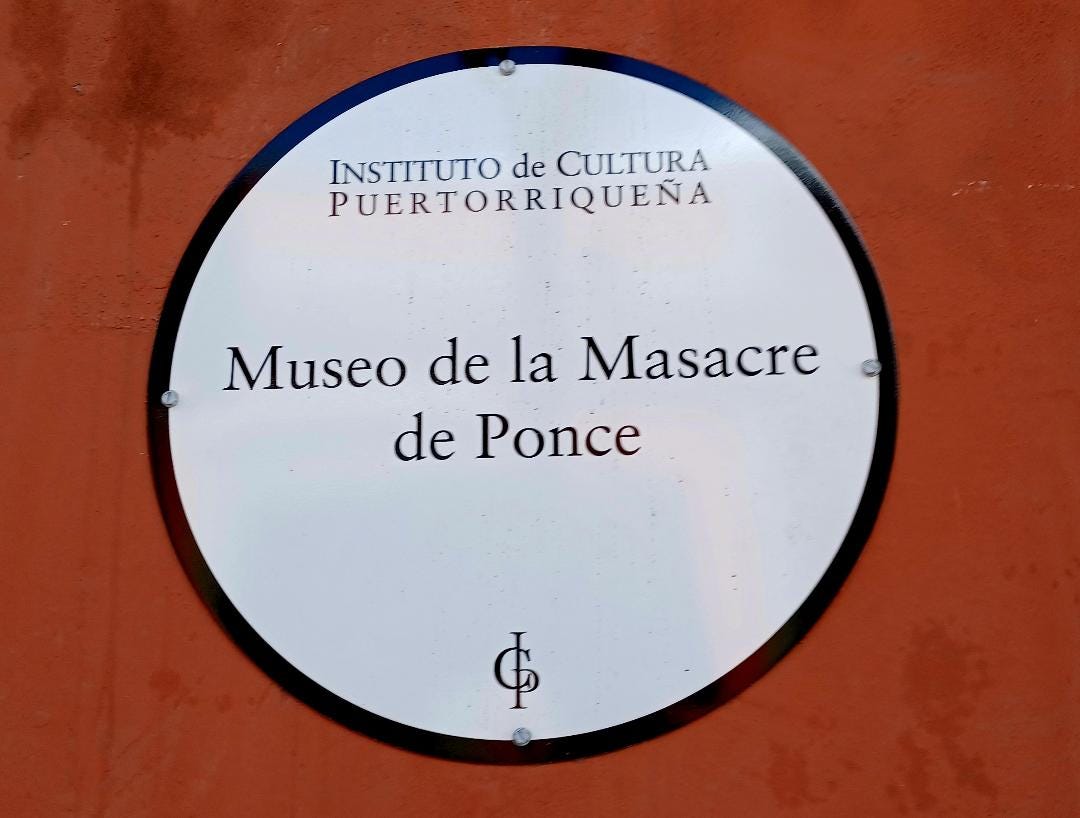
Over the decades, there have been periodic plebiscites and referenda regarding the future of La Isla Del Encanto. The population has been narrowly divided between those favoring the status quo, and those who want would like to see their home admitted as the 51st state. Nationalists have historically been a small minority, but it is worth noting that in the 2024 election, those voting for independence reached double digits for the first time.
During this bleakest of Lents, Puerto Ricans – like millions of their fellow Americans – find the very notion of citizenship under attack. To the MAGA regime, rights do not flow from the Constitution or the Rule of Law. Rather, they are seen are privileges subject to the fickle whims of a vindictive narcissist.
Nevertheless, the 2025 iteration of Carnaval Ponceño once again served to kindle the glow of hope. Three nights before the Sardine’s burial, another procession made its way toward Plaza las Delicias. The purpose: to celebrate the coronation of Kelianes Medina Sabatér as Carnival Queen. Before a joyous crowd, she received a crown and scepter passed over by Gamalis Narvaez, the 2024 monarch. In a land that has never known sovereignty, it was poignant to see a young woman endowed with the emblems of a sovereign. Her authority may be temporary and symbolic – but symbols have a power of their own.
Around the world, Carnival rites may benefit from governmental grants or corporate largesse. Yet in the final analysis, The Tradition is a manifestation of popular joy. Each year, it guarantees continuity of culture and strengthens the sense of self for all who participate. No general or governor, no president or king can ever fully crush that spirit, as long as there are drums to be beaten and masks to be worn.
Puerto Rico remains "the one that got away" in our American travels. Thanks for taking us there!
Great photos and I learned a lot from this article! Thank you!